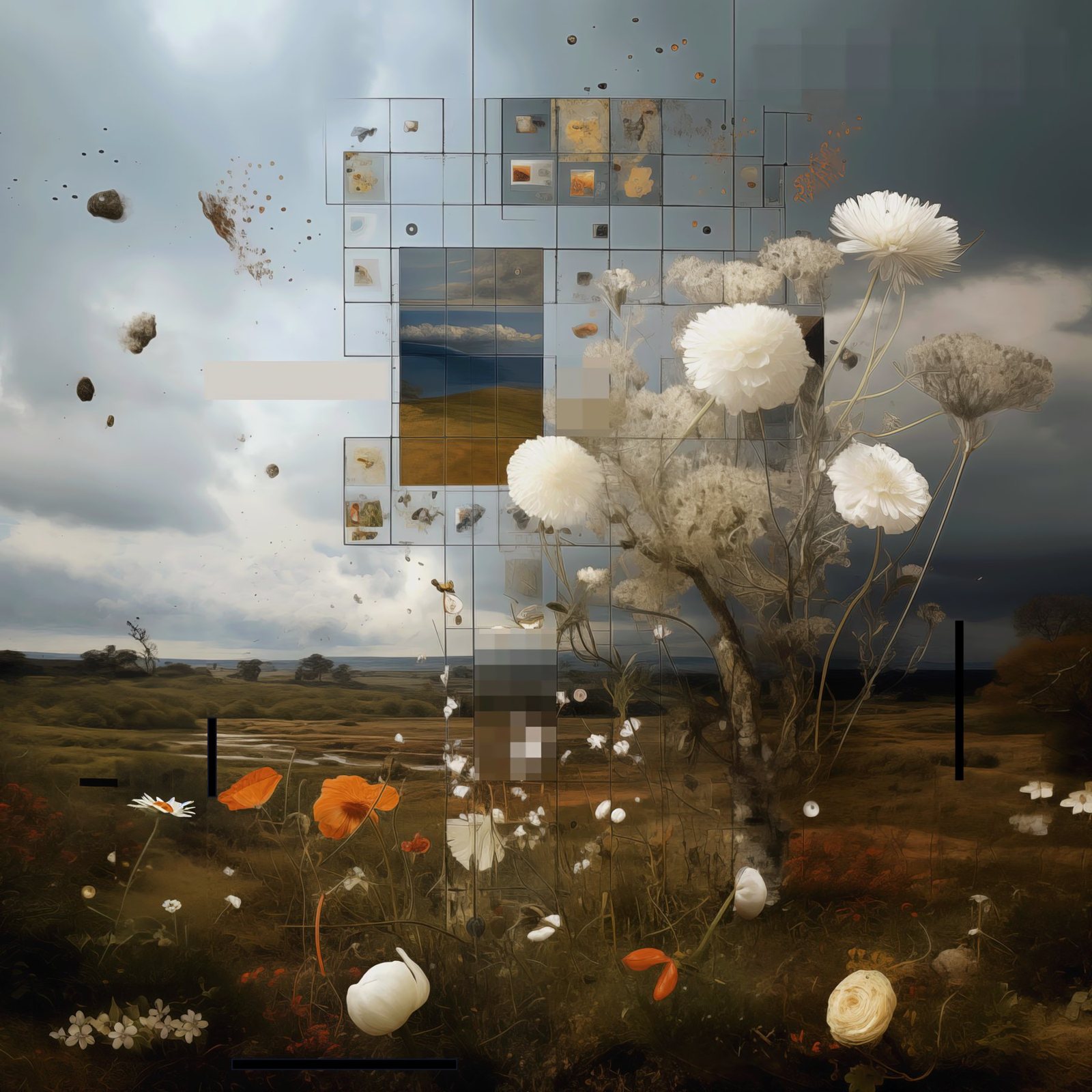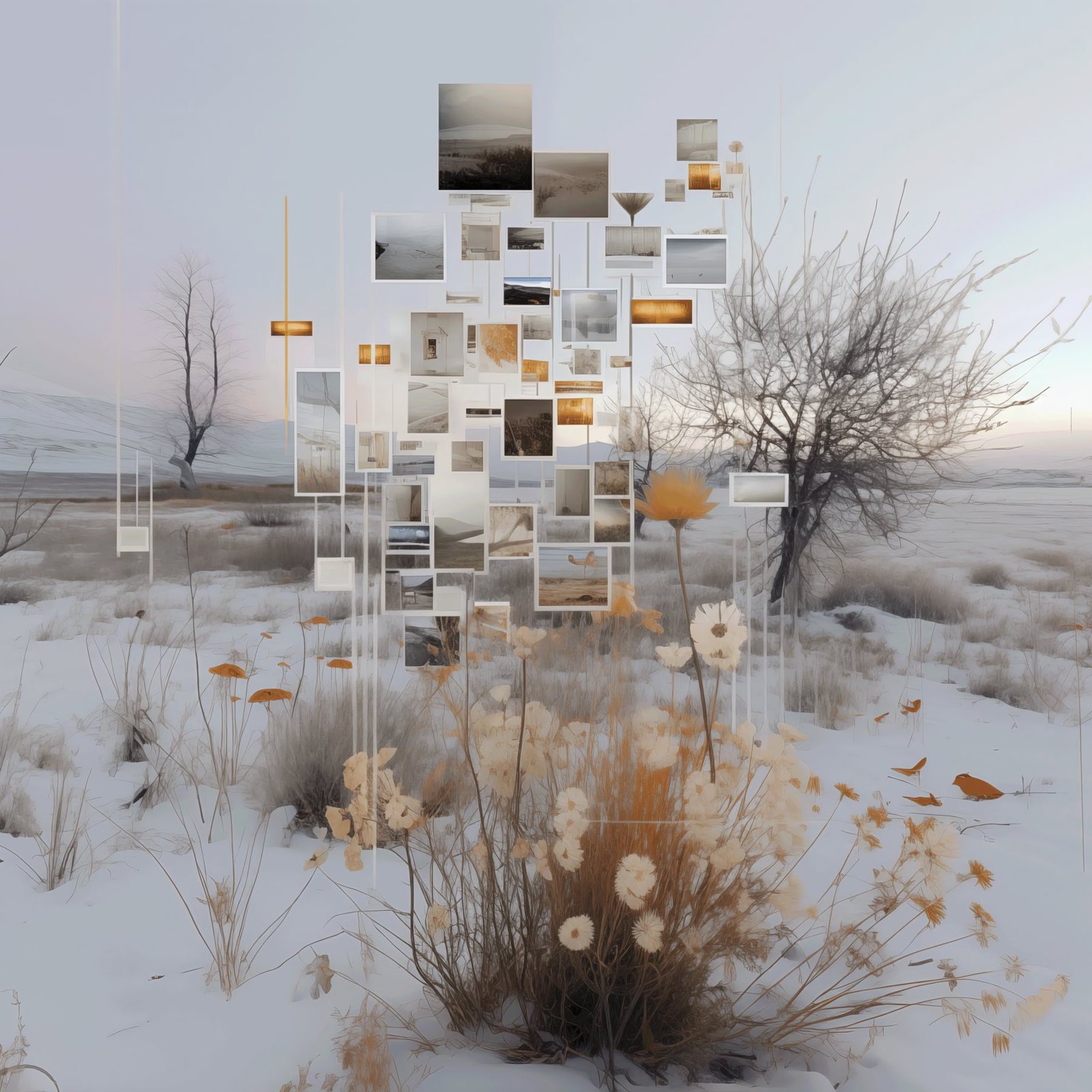
Multiplexing combines many signals into a single channel. For Santos it describes the image itself: a medium in which countless signals, data and personal perceptions, shaped by cultural background, build what we take as reality.
The pair comes out of processes that are constantly mixed and repeated. Machine learning generates synthetic landscapes; Python algorithms the artist wrote use computer vision to segment, detect, classify, group and reconfigure their pixels, moving them into a new context while keeping each pixel's colour and position. The result became the starting image for a second AI model. The work grew from one question: what happens when a pixel, with its information, is carried into a new space?
The model behind the source images was trained on more than 1,500 images of 19th-century European landscape painting, by artists such as Daubigny, Carlos de Haes and Corot. The two works were released together by Unit London: collectors who minted the first received the second to give to someone else.